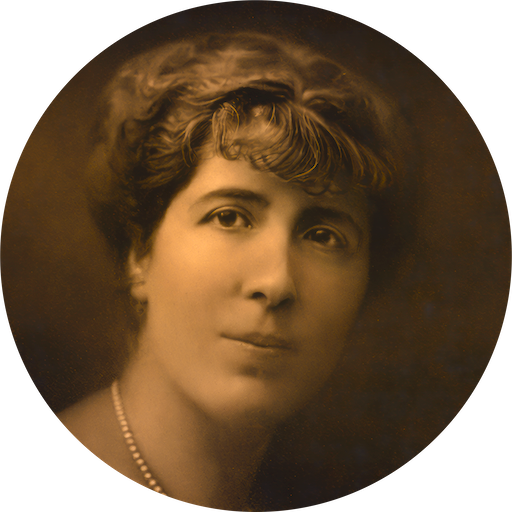
Biography
A childhood shaped by the arts
Born on 7 July 1887 in Paris, Charlotte Sohy grew up in an environment where music and theatre were ever‑present. The daughter of a École Centrale engineer and an amateur singer, she was introduced very early to the piano by Cécile Boutet de Monvel (a cousin and pupil of César Franck), and to music theory alongside Nadia Boulanger.
The young Charlotte developed a deep passion for the organ, and when the family moved near the Trocadéro in 1903, her parents installed a Cavaillé‑Coll organ in the living room. This privileged access to a symphonic instrument would very likely play a decisive role in shaping her vocation as a composer. She first studied the organ at Eugène Gigout’s school, with Mlle Ziegler, where her talent quickly became evident.
In 1905, she composed her first work, Berceuse triste, a song for soprano and piano.
Gigout saw it and picked out only the very first phrase, saying that I had not known how to make proper use of it. On his advice, I then dared to show it to Marty, my harmony teacher, who found nothing in it at all and declared the whole thing shapeless. He suggested I put it away in a drawer — which I did.
Annotation by Charlotte Sohy on her manuscript
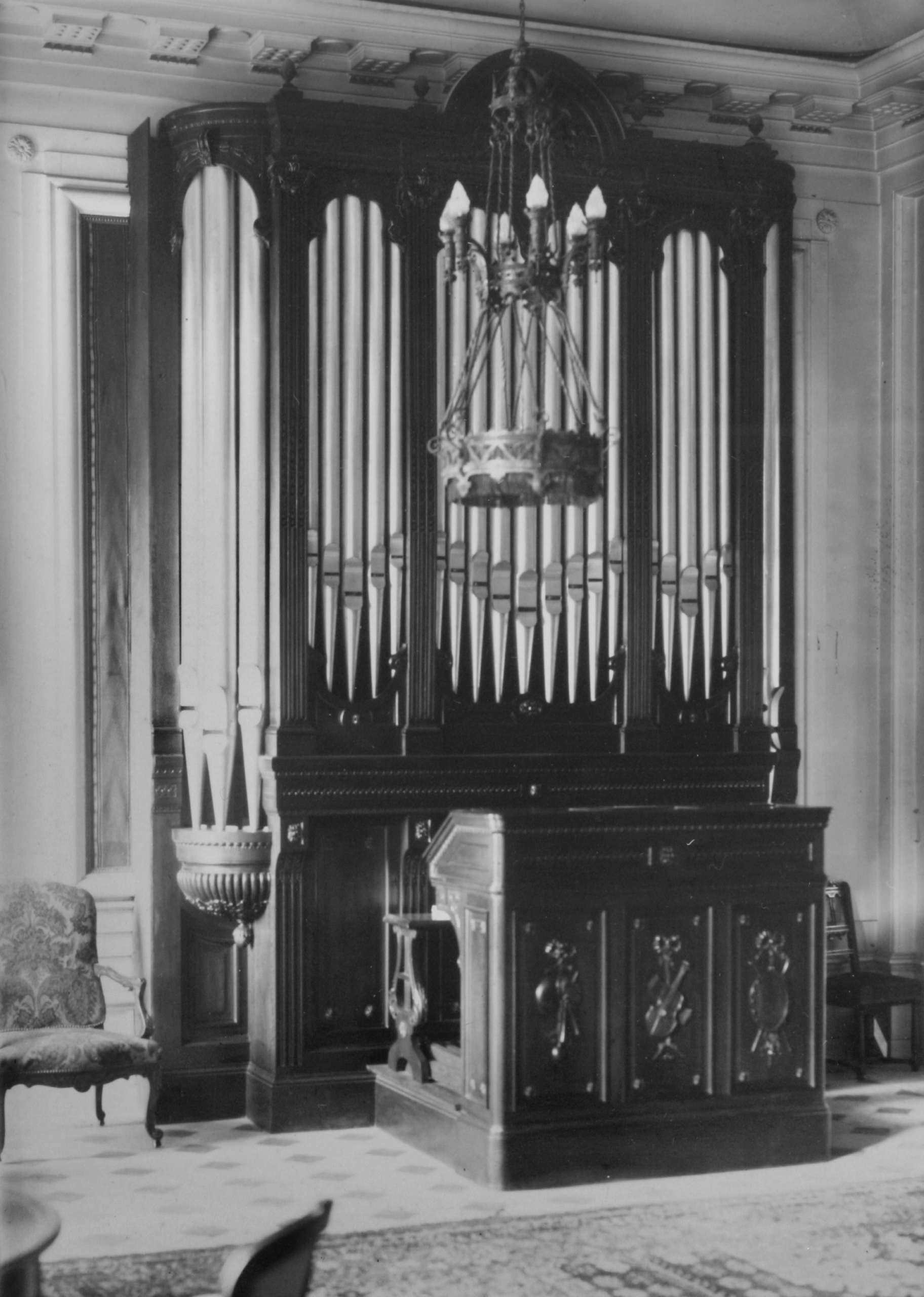
L’orgue de Charlotte Sohy.
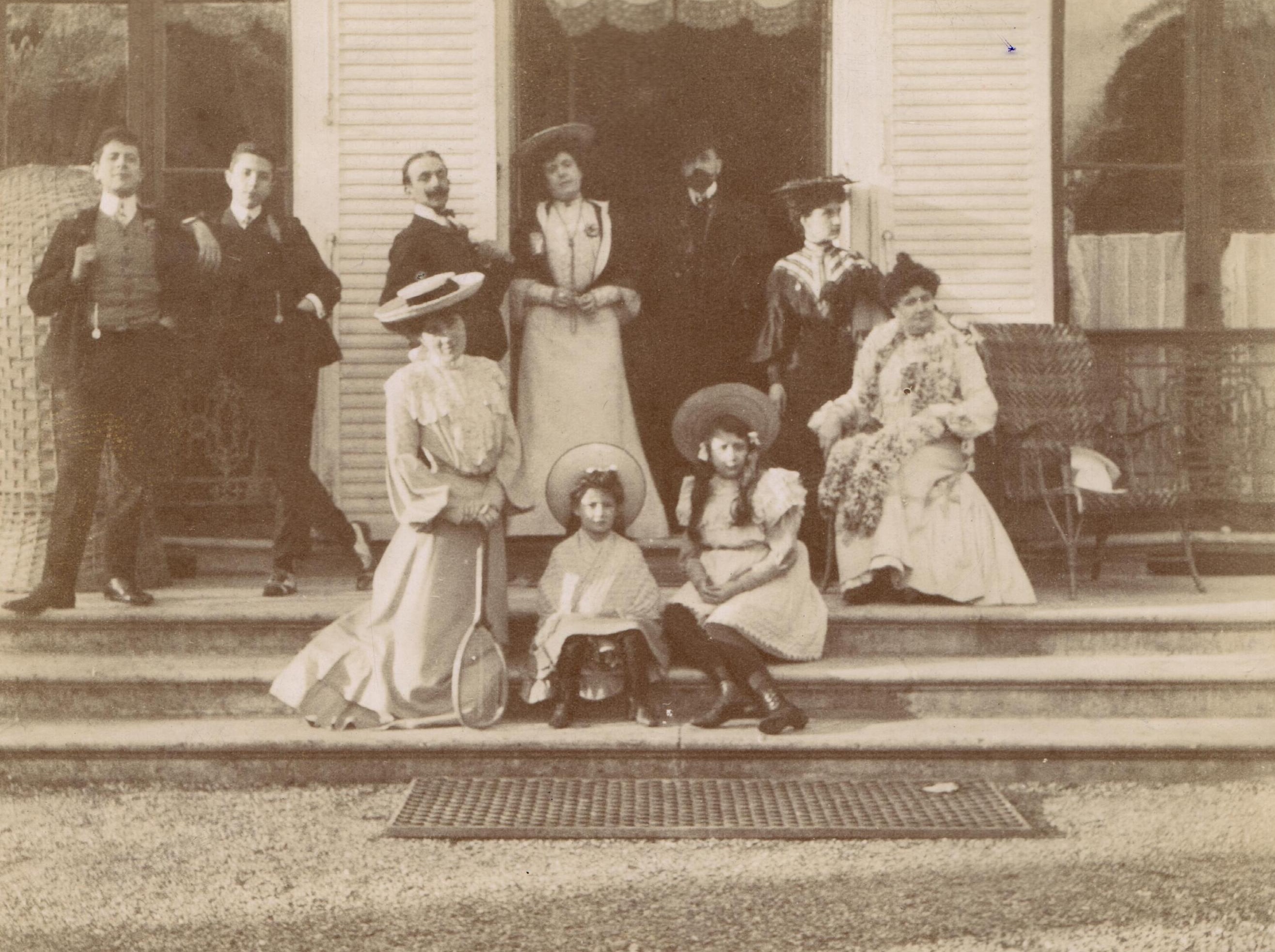
1905, au château de Groslay.
De gauche à droite devant : Charlotte Sohy (raquette à la main), inconnue, Gisèle Brillaud de Laujardière.
Derrière : André Durey-Sohy (frère de Charlotte), Charles Brillaud de Laujardière, Cyprien Halgan,
Louise Durey-Sohy (mère de Charlotte), Mr Brillaud de Laujardière, inconnue, Mme Brillaud de Laujardière (assise).
Charlotte now continued her organ studies with Alexandre Guilmant, a leading figure of the instrument, and refined her skills in composition with a woman — the composer Mel Bonis. It was perhaps on Bonis’s advice that Charlotte adopted the neutral pseudonym “Ch. Sohy.”
In 1907, she composed a Fantaisie for piano, which she submitted to her new teacher:
I am enclosing with my manuscript my Fantaisie for piano, which I am happy to submit to your critique. Please be very strict with me, won’t you, dear Madam, and above all very frank. […] You understand that this work has no pretensions, and that I never for a moment imagined publishing it! Marty has forbidden me to write before I have sufficient knowledge, but I tell myself that a child cannot learn to walk alone unless he tries by himself, at the risk of falling now and then — and so I ventured forward, with little hope of success. And then, I have so many ideas in my head that it sometimes becomes burdensome, and in undertaking this work I thought it might calm the ardour of all those thoughts a little. I therefore believe, dear Madam, that you may find in this piece a few good passages, but no doubt many poor ones due to my great inexperience. You see that I am trying to judge myself as fairly as possible, without letting myself be carried away by a sense of vanity — so ridiculous in such a case, and above all so harmful to any progress to be made. That is why I await your critique in all humility of spirit, certain that it will be both just and affectionate.
Letter from Charlotte Sohy to Mel Bonis, September 1907 (Mel Bonis archives)
Mel Bonis received the work warmly and wrote « Bon début », then « Joli »on the manuscript. Far from being mere exercises, these early compositions — to which one may add the Chants de la lande written in 1908 — already display a clear command of her craft. They reveal a lyrical, even dramatic sensitivity that foreshadows the defining qualities of her later output.
The Schola Cantorum and the encounter with Marcel Labey
Next episode coming soon!